
 Labuan Bajo · Komodo · Flores · Bali
Bali Wood Carving Export: Authentic Balinese Artistry
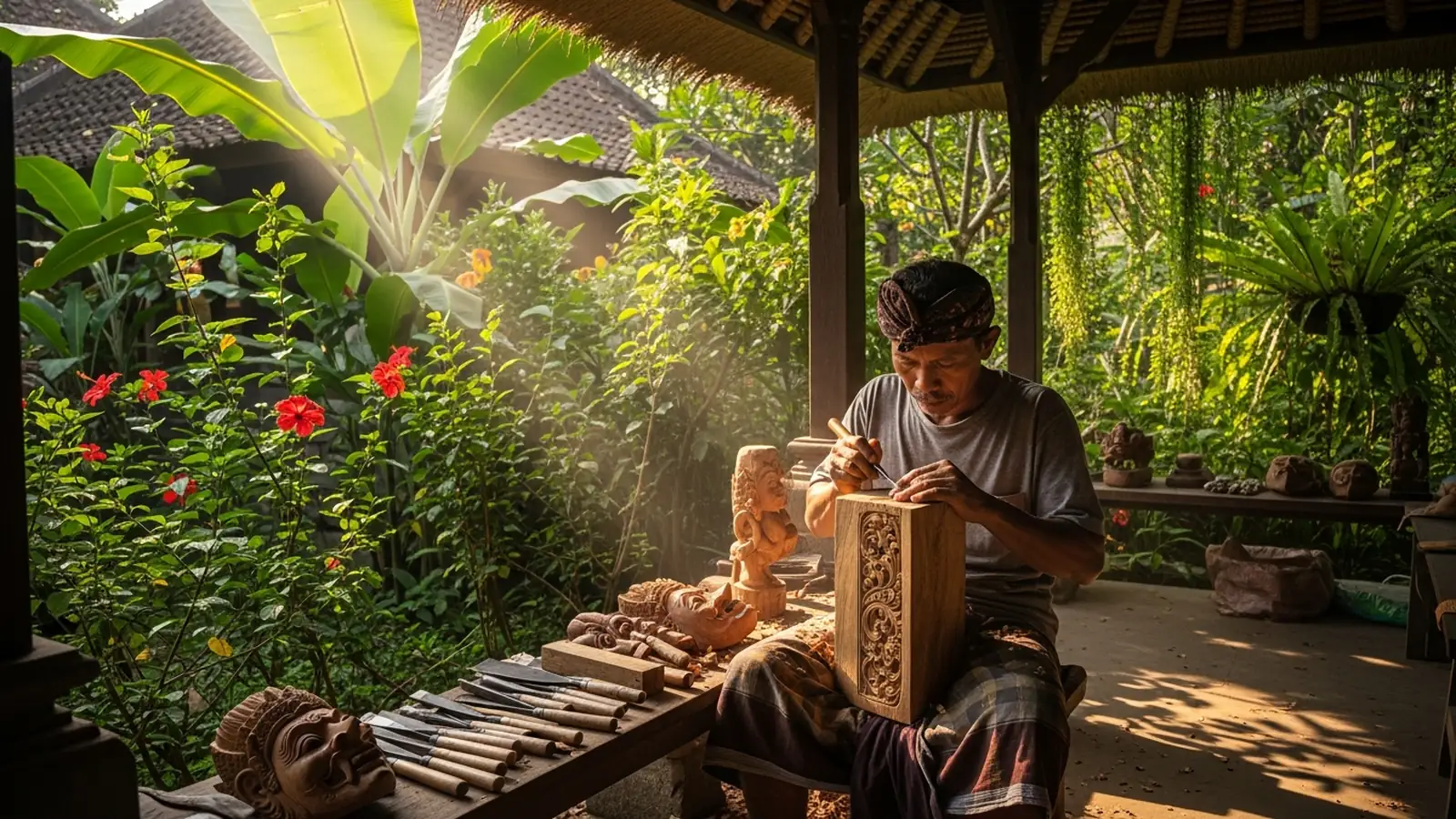
Discover the finest Balinese wood carvings, handcrafted by skilled artisans for global importers. From intricate statues to custom furniture, each piece reflects Bali's rich cultural heritage.
What are you looking for?
Let us know your needs and we'll guide you to the right selection.
For businesses seeking authentic Balinese craftsmanship, Bali Wood Carving Export connects you with the rich traditions of wood carving from Bali, Flores, and Labuan Bajo. Our focus is on providing high-quality, legally sourced wooden crafts that meet international standards. We understand the needs of importers, wholesalers, and designers, ensuring a seamless export process tailored to your requirements.
Understanding the Balinese Wood Carving Tradition
Balinese wood carving is an art form deeply rooted in the cultural heritage of villages like Mas, Tegallalang, and Ubud in the Gianyar Regency. These areas are renowned for their skilled artisans who create intricate designs using traditional techniques. The carvings often depict scenes from Hindu mythology, local wildlife, and daily life, making them appealing to a global audience. Importers and retailers interested in these unique pieces can expect them to be crafted from suar, teak, mahogany, and albasia woods, each offering distinct characteristics in terms of grain, durability, and cost. Suar wood, for instance, is popular for its attractive grain and moderate pricing, making it ideal for decorative bowls and sculptures.
Export Regulations and Legal Compliance
Exporting wooden crafts from Indonesia requires adherence to specific legal frameworks and documentation. Most Indonesian craft-export businesses operate as CV (Commanditaire Vennootschap) or PT (Perseroan Terbatas), which are recognized under Indonesian law. To legally export, companies must list an NPWP (tax number) and company registration (TDP/NIB). Additionally, compliance with the SVLK (Sistem Verifikasi Legalitas Kayu) is crucial to prove the legal origin of timber. Buyers should be aware that importing countries often require HS codes like 4420 or 9403 for customs classification. Ensuring all legal requirements are met is essential for a smooth import process.
Materials and Pricing for Export
The choice of wood significantly impacts the pricing and appeal of Balinese carvings. Suar wood is commonly used for its aesthetic appeal and moderate cost, while teak is favored for premium carvings and outdoor furniture due to its durability and higher price. Albasia wood provides an economical option for mass-market exports with its lighter weight and lower cost. Wholesale prices vary based on size and complexity: small statues (15-30 cm) range from USD 3-10, medium carvings (30-60 cm) from USD 10-40, and large sculptures over 1 meter can cost USD 80 to several hundred dollars. Prices are typically quoted in Indonesian Rupiah and converted to USD for international buyers.
Production and Lead Times
Production lead times for wood carvings from Bali can range from 4 to 8 weeks, influenced by the complexity of the order and workshop capacity. The rainy season from November to March can extend drying and finishing times, while the dry season from April to October is optimal for larger production runs. Exporters often combine traditional hand-carving techniques with machine assistance to increase consistency and output. Quality control, packaging, and logistics are meticulously managed to ensure timely delivery to international destinations.
Shipping and Logistics
Shipping wooden crafts from Bali or Flores typically involves LCL (Less than Container Load) for smaller orders or FCL (Full Container Load) for larger shipments, using major ports like Benoa or Surabaya. Buyers are responsible for arranging shipping and insurance, often through a freight forwarder. The use of FOB (Free On Board) or EXW (Ex Works) terms is common, allowing buyers to control logistics from the point of export. Compliance with international plant health rules, like ISPM 15 for wood packaging, is necessary to prevent pest infestations.
Quality Assurance and Buyer Expectations
Maintaining high quality is crucial for satisfying international buyers. Common issues such as inconsistent sizes, colour variations, and cracking due to insufficient drying are addressed by reputable exporters through kiln or air-drying processes. Buyers often request sample pieces or small trial orders to evaluate the quality before committing to larger quantities. Ensuring stable moisture content (around 10-14%) and using protective packaging like bubble wrap and wooden crates are standard practices to minimize damage during transit.
Customisation and Market Preferences
Balinese wood carving exporters offer customisation options to cater to specific market preferences. Common finishes include natural oils, clear varnish, polyurethane, and coloured paints. These finishes are selected based on the target market’s aesthetic and functional requirements. Exporters work closely with buyers to tailor products that meet their unique specifications, whether for retail, interior design, or hospitality projects. This flexibility ensures that buyers receive products that align with their brand and customer expectations.
Exploring the Potential of Komodo-themed Crafts
Flores and Labuan Bajo are known for their Komodo-themed carvings, catering to tourists visiting the Komodo National Park. These unique souvenirs include dragon and lizard sculptures and boat models, which appeal to a niche market interested in exotic and themed decor. Exporters from these regions leverage the popularity of Komodo-related crafts to expand their reach to international buyers seeking distinctive and culturally significant items.
Environmental Sustainability and Ethical Practices
As global awareness of environmental sustainability grows, Bali Wood Carving Export is committed to ethical practices in sourcing and production. The use of legally sourced timber is not only a legal requirement but also a moral one. Our partners adhere to sustainable forestry practices, ensuring that the natural resources are preserved for future generations. Additionally, we emphasize fair trade principles, providing artisans with fair wages and supporting local communities. This commitment to sustainability and ethics not only enhances the appeal of our products but also ensures long-term partnerships with environmentally conscious buyers.
Technological Advancements in Wood Carving
While traditional techniques remain at the heart of Balinese wood carving, modern technology is increasingly being integrated to enhance production efficiency and precision. CNC machines and laser engraving tools are now used alongside hand-carving to achieve intricate designs with greater consistency. This fusion of tradition and technology allows us to meet large-scale orders without compromising on the quality that Balinese craftsmanship is known for. Furthermore, digital platforms facilitate real-time communication and collaboration with international buyers, ensuring that custom designs and modifications can be efficiently managed.
Marketing Strategies for Balinese Wood Carvings
Effective marketing strategies are crucial for reaching international markets and increasing the visibility of Balinese wood carvings. Online platforms and social media have become essential tools for showcasing our unique products to a global audience. We utilize high-quality photography and engaging content to tell the story behind each piece, highlighting the cultural and artistic value that distinguishes Balinese craftsmanship. Participation in international trade shows and exhibitions also plays a significant role in building relationships with buyers and expanding our market reach. By combining digital and traditional marketing approaches, we aim to connect with diverse markets and foster appreciation for Balinese art.
For more detailed information, visit our About page, explore our wholesale options, or connect with a Bali handicrafts exporter today. Ready to start your journey with Bali Wood Carving Export? Contact us now to discuss your requirements and receive a tailored quote.